The Odyssey
I can't stop thinking about this part of the movie.
"What was the siren song?
It was all the things you wanted it to be and then all the things you wished you never wished for.
It was a delicious itch you want to scratch but you find it under the skin and can't reach it.
So the delicious itch becomes unbearable.
It told you what you most want is what you most can't have
And what you most can't have is what you already had and lost.
It was a song of all the promises I failed to keep.
And it told me
I don't really want to go home."
I've been mesmerized by this scene. Nolan's interpretation is so fascinating because he transforms the most beautiful and enthralling song a man can hear into a psychological mirror. Each man will hear the calling differently, but it will be irresistible just the same.
The song of the siren is a metaphor for real life. The sirens don't tempt us with pleasure, they tempt us with our deepest longing, the lives we want and aren't living.
But in our world, what does that music sound like, and what does this siren song teach us?
All the Things You Wanted it To Be
"There is no peace for the man who has seen what he could become."
— Unknown
We might find that we carry a version of ourselves that is far ahead of the current one.
This is true for me. I've had a vision of the Alvin Pane who has seen everything and done everything. And now that I've seen him, there is no turning back. Every day of my life is spent in the pursuit of becoming.
How do I get there? Many paths lie in front of me and I can't possibly know which one is correct. What if I choose the wrong one?
These are questions we ask ourselves, and they lead to something I think of as "The Curse of Optionality."
We want it all, to become our potential. And here's the thing, you CAN have it all. There's just one catch. You can have anything, but you can't have everything. Our decisions have consequences.
Choosing something doesn't just mean saying yes to that one thing, it means saying no to a million other things.
The journey of the hero is marked by such decisions.
When you choose one path and take a step towards it, you've immediately closed the door on a million other paths. And so maybe you optimize for a path that closes as few doors as possible along the way, collecting information, hoping to make the perfect decision at some point that leads directly to that vision of you.
"You call yourself a free spirit, a 'wild thing,' and you're terrified somebody's gonna stick you in a cage. Well baby, you're already in that cage. You built it yourself... Because no matter where you run, you just end up running into yourself."
— Breakfast at Tiffany's
The free spirit isn't actually free. By not committing, they become slaves to their desires. This is why the siren song leads to certain death.
The committed man serves one thing, and he chose it. The free spirit serves whichever siren sings loudest today.
Optionality is a siren song.
The Mast
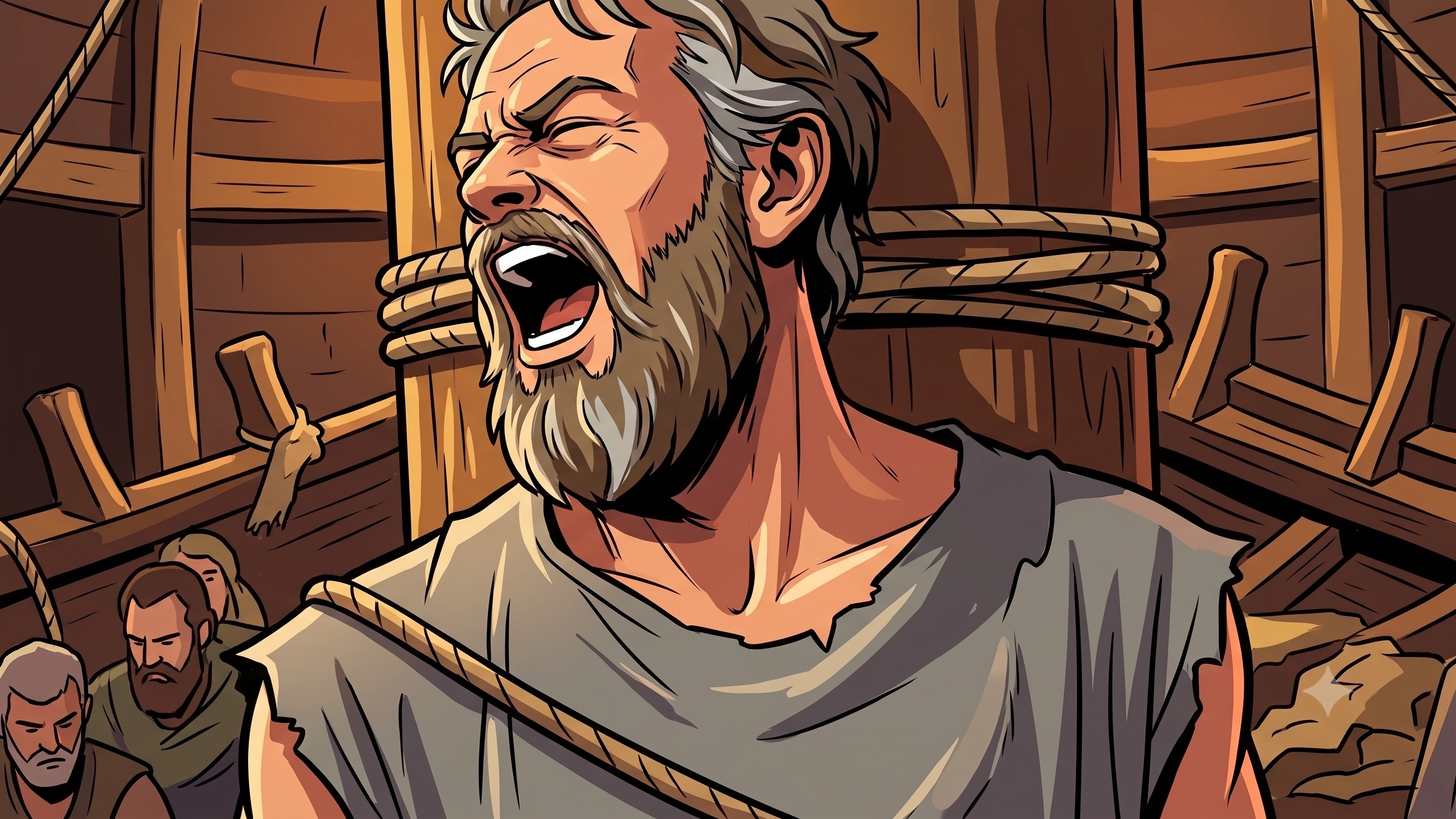
Odysseus only survives the siren song because he understands that in the moment of temptation, he will not be able to trust himself.
So he makes the decision before the temptation ever arrives. He ties himself to the mast.
You can only survive the sirens by tying yourself to the mast.
The sirens and the mast are the two philosophies a man can live by. The sirens are infinite possibility, they tell you the grass is greener on the other side, there's another life waiting for you, another path, another version of yourself. The mast is commitment, it forces you to pick one.
This is the trade of a meaningful life, and there's no way around it, commitment requires sacrifice. When you throw yourself into chasing one dream you've accepted that the rest stay dreams.
But none of this is a tragedy, this is how greatness gets built, the only way it's ever been built. Nothing compounds until you commit, not money, not relationships, not love.
Those who build extraordinary lives are not the ones who found the perfect path, there is no perfect path to find. Andy Grove, the man who built Intel, had a rule for choosing without certainty: "Act on your temporary conviction as if it was a real conviction; and when you realize that you are wrong, correct course very quickly."
Otherwise stated, your direction doesn't need to be the best, but it does need to be clear.
You must choose your mast:
Do that thing,
Start the business,
Marry that girl,
Write the book,
Make the promise.
And then keep the promise. Because the sirens will always sing, even if you've chosen. Let them sing.
The man tied to the mast has already chosen.
He knows who he is going to become.